
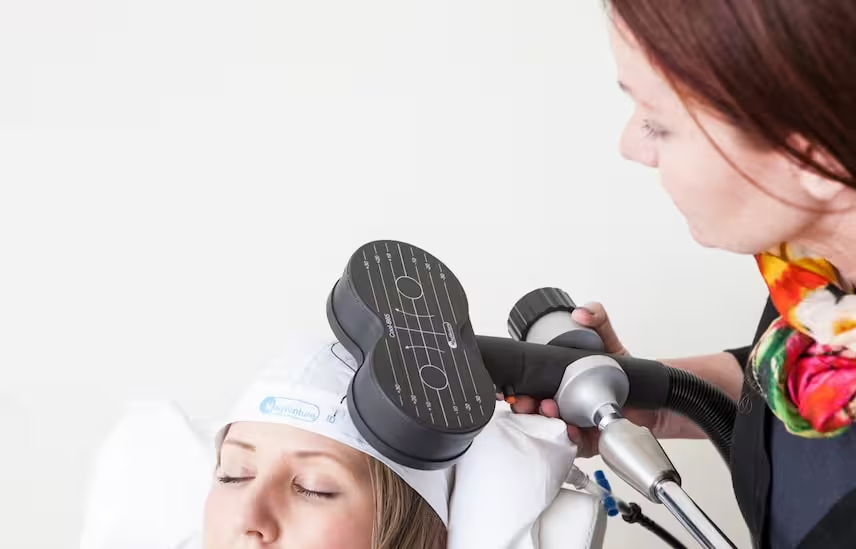
Repetitive Transcranial Magnetic Stimulation (rTMS)

A gentle, non-invasive therapy that supports mood, emotional balance, and long-term mental well-being.

Wondering if rTMS Might Support You?

rTMS is a drug-free, evidence-based treatment that uses gentle, focused magnetic pulses to stimulate areas of the brain involved in mood regulation.

In conditions like depression, anxiety, and OCD, certain neural pathways can become underactive. rTMS helps “wake up” these regions, strengthening neural activity over time and supporting more stable, balanced emotional functioning.

For individuals who haven’t found sufficient relief through medication or traditional therapy alone, rTMS offers a safe, modern, and effective alternative.

  • Non-invasive, drug-free treatment with no sedation or downtime
  • Targets brain regions involved in mood regulation to support lasting symptom relief
  • Can improve depression, anxiety, focus, motivation, and emotional balance
  • Well-tolerated and safe, with sessions completed while fully awake
  • Backed by strong clinical evidence for treatment-resistant depression
  • Individuals with depression who haven’t found enough relief from medication or therapy alone
  • People seeking non-medication or low-side-effect treatment options
  • Those experiencing persistent low mood, lack of motivation, or cognitive fog
  • Individuals with anxiety, OCD, or related mood disorders (case-dependent)
  • Clients looking to complement psychotherapy with a neurobiological approach

rTMS is FDA-approved for treatment-resistant depression.

This means it has strong clinical evidence demonstrating safety and effectiveness.

rTMS can increase neuroplasticity, the brain’s ability to form new connections.

This helps explain why mood improvements continue even after treatment ends (Fitzsimmons et al., 2024).

rTMS targets the left dorsolateral prefrontal cortex, a region often underactive in depression.

Stimulating this area can restore healthier activity patterns linked to mood regulation (Fox et al., 2012).

Sessions require no anesthesia and have no systemic side effects.

Unlike medications, rTMS acts locally on the brain without affecting the rest of the body.

rTMS is also being studied for anxiety, PTSD, OCD, and chronic pain.

This reflects growing evidence of its impact on neural circuits beyond mood.

Meet Our Clinicians

rTMS emerged in the 1980s as neuroscientists discovered that magnetic fields could safely stimulate targeted brain regions. Early research focused on mapping brain function, but clinicians soon realized its therapeutic potential for depression. By the 2000s, large-scale trials established rTMS as an effective treatment, leading to FDA approval. Today, rTMS continues to evolve as researchers explore its role in anxiety, OCD, trauma-related conditions, and cognitive health.

What can I expect in a session?

rTMS is painless, safe, and performed while you’re fully awake. There is no sedation, needles, or downtime. Most people describe the sensation as gentle tapping on the scalp and feel comfortable returning to their day immediately after.

Who is NOT eligible for rTMS?

Folks with metal implants, pace makers, deep brain stimulators, and traumatic brain injuries are ineligible for the treatment.

Are there any risks or side effects with rTMS?

Side effects are typically mild and may include temporary scalp discomfort or headache.

Can I continue medication while receiving rTMS?

In many cases yes, but this is reviewed during your clinical assessment.

What can I expect in a session? 

rTMS is painless, safe, and performed while you’re fully awake. There is no sedation, needles, or downtime. Most people describe the sensation as gentle tapping on the scalp and feel comfortable returning to their day immediately after. 

Is it an invasive process?

No. rTMS procedure does not involve tools that break the skin or physically enter the body.

How long will I feel its effects? 

rTMS can provide long-lasting relief from your symptoms, with results lasting for months or even years.

Support your brain’s natural ability to regulate mood.

Experience the power of targeted magnetic pulses to underactive areas of the brain linked to mood.